How Much Do You Really Need to Buy a Condo in Singapore? (2026 Edition)
Down payment, BSD, ABSD, TDSR, CPF — most buyers only discover the real cash required after they've already fallen in love with a unit. Here's the exact 2026 breakdown for a $1M to $2M condo purchase, so you walk in prepared.

ARTICLE BODY
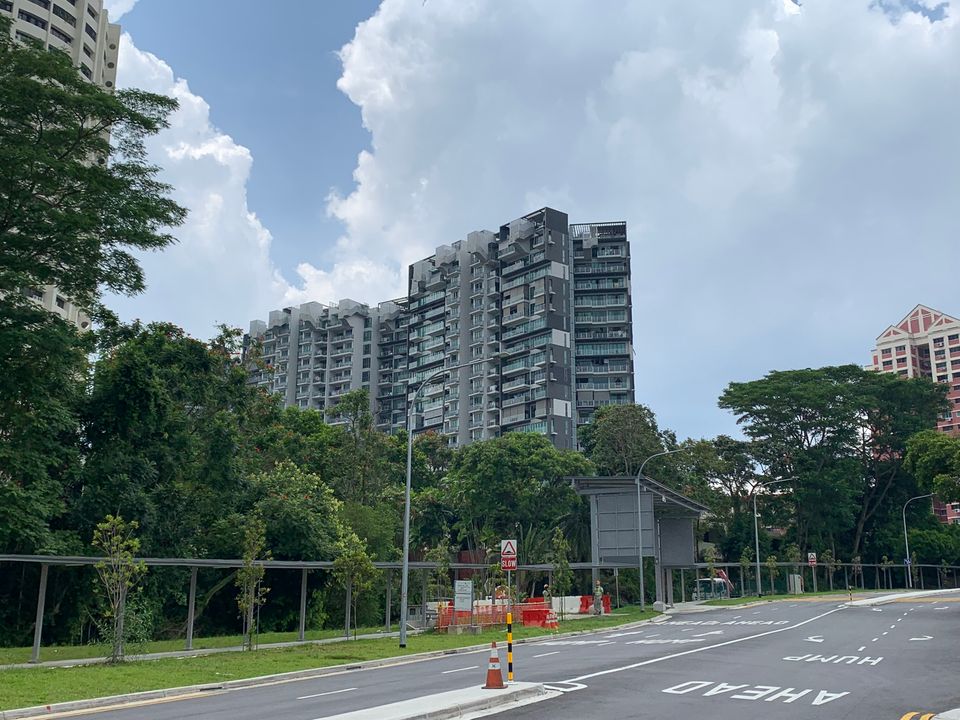
You've been eyeing that development on the way to the MRT. The showflat is open this weekend. The prices start at $1.4M and you're thinking — can we actually do this?
Here's the problem with how most buyers approach that question: they call the developer hotline and ask about the price quantum. They hear "$1.4M" and they either feel relieved or deflated — and they stop there.
The price quantum is the wrong number. It tells you the size of the asset. It does not tell you how much money needs to leave your bank account and CPF on the day you commit, or in the months and years that follow.
The buyers who get into trouble are rarely the ones who couldn't afford a property. They're the ones who bought the right property with the wrong cash preparation. This guide is designed to make sure that's not you.
The Four Numbers Every Singapore Property Buyer Must Know Before Viewing
Before you walk into a single showflat in 2026, you need clarity on four numbers:
- Your maximum loan quantum (determined by TDSR and LTV rules)
- Your required down payment (cash + CPF, based on your buyer profile)
- Your stamp duty liability (BSD — always; ABSD — if applicable)
- Your total cash outlay at signing (what actually leaves your account on day one)
Get these four numbers right and you can walk into any showflat in Singapore and make a decision with full confidence. Walk in without them and you are making one of the largest financial commitments of your life on incomplete information.
Number 1: How Much Can You Actually Borrow?
Your loan quantum is governed by two rules that the Monetary Authority of Singapore (MAS) sets and enforces without exception.
TDSR — Total Debt Servicing Ratio
Your total monthly debt obligations — mortgage, car loan, personal loan, credit card minimum payments — cannot exceed 55% of your gross monthly income.
In practice, for a comfortable financial buffer, target 35–40%.
Worked example: Household gross monthly income: $12,000 40% TDSR threshold: $4,800/month available for all debt servicing If you have a $800/month car loan: $4,000 available for mortgage At 3.5% interest over 30 years, $4,000/month services approximately $890,000 in loan
This is your true loan capacity — not what the bank's brochure says, not what the agent tells you at the showflat.
LTV — Loan-to-Value Limit
The LTV determines how much of the purchase price the bank will lend you.
| Buyer Profile | Max LTV | Minimum Down Payment |
|---|---|---|
| SC / SPR / Foreigner, 1st residential property | 75% | 25% (5% must be cash) |
| SC / SPR / Foreigner, 2nd residential property | 45% | 55% (25% must be cash) |
| 3rd and subsequent property | 35% | 65% (25% must be cash) |
Source: MAS Notice 632 (updated), effective 2024–2026
This is the number most buyers get wrong. Many assume 20% down payment across the board. For a first property, it is 25%. For a second property — which includes the scenario where you upgrade from HDB to condo while retaining an investment property — it rises sharply to 55%.
If you are an HDB upgrader selling your HDB to fund a condo purchase, you typically revert to the first-property LTV (75%) — but timing and sequencing of the sale matters enormously for your cash flow.
Note: These LTV rules apply to bank loans. HDB loans (only applicable to HDB flat purchases) have different parameters.
Number 2: Your Down Payment in Real Dollar Terms
Let's make this concrete. Here is the minimum down payment for a first and second property purchase across three price points in 2026.
First Property (SC, no outstanding home loans)
| Purchase Price | Min Down (25%) | Cash Component (5%) | CPF Can Fund |
|---|---|---|---|
| $1,000,000 | $250,000 | $50,000 | $200,000 |
| $1,500,000 | $375,000 | $75,000 | $300,000 |
| $2,000,000 | $500,000 | $100,000 | $400,000 |
The CPF component is drawn from your Ordinary Account (OA). The key constraint: your CPF OA balance must be sufficient, and if you use CPF for property, you must set aside the Basic Retirement Sum (BRS) first if you are above 55.
Check your CPF OA balance at cpf.gov.sg before shortlisting properties. Do not assume — verify.
Second Property (SC, existing outstanding home loan)
| Purchase Price | Min Down (55%) | Cash Component (25%) | CPF Can Fund |
|---|---|---|---|
| $1,000,000 | $550,000 | $250,000 | $300,000 |
| $1,500,000 | $825,000 | $375,000 | $450,000 |
| $2,000,000 | $1,100,000 | $500,000 | $600,000 |
The numbers look daunting — but for many upgraders and investors, the equity from an existing property (either via CPF refund from sale, or cash proceeds) funds a significant portion of this requirement.
Number 3: Stamp Duty — The Cost Everyone Forgets to Budget For
Stamp duty is non-negotiable and non-refundable. It must be paid within 14 days of the Option to Purchase being exercised.
Buyer's Stamp Duty (BSD) — Applies to ALL purchases
| Purchase Price Band | BSD Rate |
|---|---|
| First $180,000 | 1% |
| Next $180,000 | 2% |
| Next $640,000 | 3% |
| Next $500,000 | 4% |
| Next $1,500,000 | 5% |
| Remainder above $3,000,000 | 6% |
Source: IRAS, effective from February 2023
BSD worked examples:
$1,000,000 property:
- $180k × 1% = $1,800
- $180k × 2% = $3,600
- $640k × 3% = $19,200
- Total BSD: $24,600
$1,500,000 property:
- $180k × 1% = $1,800
- $180k × 2% = $3,600
- $640k × 3% = $19,200
- $500k × 4% = $20,000
- Total BSD: $44,600
$2,000,000 property:
- As above up to $1.5M: $44,600
- $500k × 4% = $20,000
- Total BSD: $64,600
BSD can be paid using CPF OA. This is a meaningful relief — it reduces the cash outlay at signing.
Additional Buyer's Stamp Duty (ABSD) — Applies based on buyer profile
| Buyer Profile | 1st Property | 2nd Property | 3rd+ Property |
|---|---|---|---|
| Singapore Citizen | 0% | 20% | 30% |
| Singapore PR | 5% | 30% | 35% |
| Foreigner | 60% | 60% | 60% |
Source: IRAS ABSD rates, effective from April 2023
This is the number that changes the entire calculus for upgraders. A Singapore Citizen buying a $1.5M second property pays $300,000 in ABSD alone — before down payment, BSD, or any other cost.
The ABSD must be paid in cash. It cannot be funded by CPF. It cannot be included in your bank loan.
For most upgraders, this means the ABSD question has a simple answer: sell your HDB before or simultaneously with your condo purchase to avoid being classified as a second property buyer. The sequencing of sale vs purchase is one of the most important decisions in the entire transaction — and it is exactly what I help clients map out before they commit to anything.
Number 4: Your Total Cash Outlay on Day One
Here is the complete picture for a Singapore Citizen buying a first $1.5M private condo with a bank loan:
| Item | Amount | Payable in |
|---|---|---|
| Cash component of down payment (5% of purchase price) | $75,000 | Cash |
| CPF component of down payment (20% of purchase price) | $300,000 | CPF OA |
| Buyer's Stamp Duty | $44,600 | CPF OA or Cash |
| Legal fees (conveyancing) | ~$3,500 | Cash |
| Agent commission (if applicable) | $0 (buyer pays nothing in Singapore) | — |
| Renovation budget (resale) | $50,000–$120,000 | Cash |
| Minimum cash needed at signing (new launch, no reno) | ~$78,500 | Cash |
| Total CPF deployed at signing | ~$344,600 | CPF OA |
For a first-property purchase, the cash ask is lower than most people fear — provided your CPF OA is adequately funded. The key question is whether you have $75,000–$100,000 in cash savings and $300,000+ in CPF OA available.
If your CPF OA is below $300,000, you either need to supplement with additional cash, or target a lower price point where the CPF requirement is met by your existing balance.
James's Note: The most common mistake I see at the pre-commitment stage is buyers checking their CPF balance but forgetting to subtract the amount ring-fenced for the Basic Retirement Sum (if above 55), or forgetting that CPF used for a previous property must be refunded with accrued interest if the property is sold before a purchase. I run a full CPF audit for every client before we shortlist. WhatsApp me at 91111173 if you want to know your exact deployable CPF for a 2026 purchase.
Can You Service the Monthly Mortgage?
Affordability is not just about the day of signing. It is about every month for the next 25–30 years.
Here is the monthly mortgage payment at different loan sizes and interest rates:
| Loan Amount | 30-year term @ 3.0% | 30-year term @ 3.5% | 30-year term @ 4.0% |
|---|---|---|---|
| $750,000 | $3,162 | $3,368 | $3,581 |
| $1,000,000 | $4,216 | $4,490 | $4,774 |
| $1,125,000 | $4,743 | $5,051 | $5,371 |
| $1,500,000 | $6,325 | $6,735 | $7,161 |
UOB Economics & Markets Research (January 2026) forecasts SORA 3M at approximately 1.32% by end-2026, suggesting bank mortgage rates could ease toward 3.0–3.2% on floating packages. Fixed rate packages in early 2026 were pricing at approximately 2.8–3.2% for 2-year lock-ins.
Always stress-test at 4.0%. The purpose of stress-testing is not pessimism — it is ensuring that if rates move against you, your household does not face forced sale pressure at the worst possible moment.
The table above tells you what you need your household income to be. For a $1.125M loan at 3.5% ($5,051/month), you need a minimum household income of approximately $9,180/month to meet TDSR at 55% — and ideally $12,600/month if you target the more comfortable 40% threshold.
The Monopoly Lesson That Actually Matters
When I play Monopoly with my kids, there is one lesson I make sure they take away — and it is not "buy everything you land on."
It is this: the players who run out of cash lose, regardless of how many properties they own.
In Monopoly, you can have the most expensive real estate on the board and still lose the game if you cannot pay when the bill arrives. Singapore property works the same way. Paper gains are meaningless if your monthly cash flow is strained, your reserves are depleted, and one unexpected event — retrenchment, medical, family change — forces a sale at the wrong time.
The sustainable property investor does not buy at the maximum of what the bank will lend. They buy at the point where:
- Monthly mortgage is comfortably within 40% of household income
- 6 months of mortgage payments remain in liquid savings after purchase
- The decision makes sense even if prices stay flat for three years
That discipline — not the size of the loan — is what separates buyers who build wealth from buyers who spend decades servicing debt on an asset that never works for them.
What's Your Number?
Every buyer has a different number. It depends on your household income, your CPF balance, whether this is your first or second property, your citizenship status, and your existing debt obligations.
The fastest way to find yours is to run the calculation with someone who has done it hundreds of times for buyers in your exact situation.
WhatsApp me at 91111173 and I'll calculate your exact maximum loan, required down payment, stamp duty liability, and monthly mortgage — across three property price points — in one conversation.
No showflat visit needed. No commitment. Just your numbers, clearly laid out, so you can make a decision with full information.
Sources: MAS Notice 632 (LTV and TDSR rules), IRAS Stamp Duty tables (effective February 2023 and April 2023), CPF Board property usage guidelines, UOB Global Economics & Markets Research Outlook 2026 (January 15, 2026), MAS property cooling measures.
Disclaimer: Figures in this article are illustrative and based on standard scenarios. Individual circumstances vary — consult a CEA-licensed property consultant and a licensed financial adviser before making any property purchase decision. James Ong is a CEA-licensed consultant with PropNex Realty. CEA Reg No. R008385F